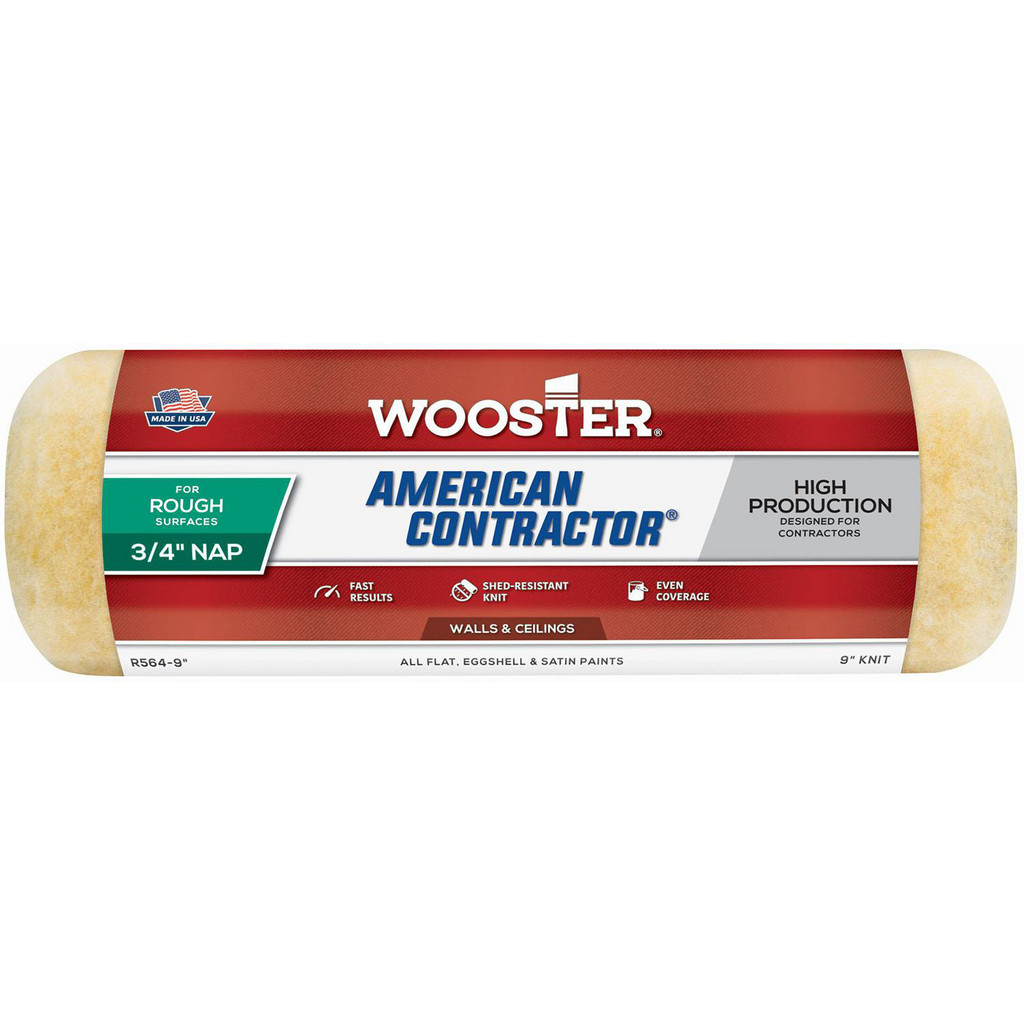


When you think of painting you may think only of paint brushes. Professional painters know the value of paint brushes but also have rollers in their arsenal. Paint rollers are the true workhorse when it comes to covering walls. There are many to choose from so we’re going to discuss which might be the best roller cover for the job you’re tackling.
Paint brushes have a specific task when it comes to painting. They tend to be the detail masters! Paint brushes are great for smaller areas of painting and precision work. It’s best to use a paint brush to cut in, and for corners, trim, and edges.
When it comes to painting a wall or a larger area you’ll want a roller to apply the paint. Paint rollers can hold a lot more paint and distribute it over larger areas more evenly. The best roller cover for the job depends on the substrate you’re painting.

There are different types of roller covers just like there are different types of paint brushes. Each type of roller is specifically designed for different textures and substrates.
Nap Length Is The First Consideration
Thicker naps such as ¾” – 1” hold more paint and can get into the peaks and valleys of rough textured surfaces like brick, stucco and masonry.
Medium ⅜” nap lengths work well on drywall and ceilings.
And finally, small ¼” nap lengths create the smoothest finish and are typically used on walls and metal surfaces.
Microfiber is the best roller cover for the job if you’re painting a very light textured surface. They grab the paint better than a standard roller which results in less paint splatter. While microfiber rollers are affordably priced, they will only produce a smooth finish. If you want texture, look at a different option.
What Paint Sheen Will You Be Using?
A short nap roller is the best roller cover for the job if you’re working with semi-gloss or gloss paint. The shorter nap will produce fewer bubbles in the paint and allow a better finish.

Sizes
A 7-12” length roller is the best roller cover for the job if you’re painting walls or larger surface areas,. For doors and cabinets, a 4” roller will work best. The larger size roller holds more paint and can cover a wall quickly while leaving very even coverage.
Tips For Using A Roller
- Make sure you select the right roller cover for the surface texture, or for the texture you want to create.
- It’s best to cut in a perimeter of paint around the ceilings and corners where a roller won’t fit before rolling. This will allow full coverage and keep any accidental roller bumps of paint off the ceiling.
- If you have to take a break from painting you don’t have to wash out your roller or remove it from the handle. As long as you will be getting back to your project within 24 hours you can wrap the roller. Cover the roller tightly with plastic wrap while still on its handle and put in a plastic bag. Place the bag into your refrigerator. When you’re ready, remove the roller from the refrigerator and allow it to come to room temperature before painting.
- Last but not least, Don’t go for the cheap stuff! Like most things, the best roller cover for the job will not be inexpensive. Cheap roller covers will leave fibers from the roller in the paint finish. The savings from a cheap roller cover will cost you twice that in labor to correct the finish. Stick with a quality roller.
Paint Pals has been serving Northern Colorado since 2009. Contact us for a free estimate.